


Long hours, tight delivery windows, and nights spent parked on the side of the road are part of the job for many truck drivers. But when sleep becomes disrupted or scarce, the consequences extend far beyond individual exhaustion and affect everyone sharing the highway.
A new survey of over 300 U.S. truck drivers reveals that fatigue is not an occasional problem but a widespread reality. The findings, paired with federal crash data, paint a clear picture of an industry sleep crisis that's also a road safety crisis.
Key Takeaways
- Nearly 70% of truck drivers report feeling drowsy while driving at least a few times a month.
- Roughly two-thirds of drivers (65%) get fewer than 6 hours of sleep on work nights, including 30% who get 5 hours or less.
- Only 28% of drivers start their shift feeling well-rested most days, while 17% rarely feel rested.
- A majority of truck drivers (57%) have continued driving even when they felt too tired to drive safely.
- 46% of truck drivers have nodded off or briefly fallen asleep while driving at least once in their career.
- Nearly 9 in 10 truck drivers (88%) want their employer to offer benefits specifically designed to improve sleep and recovery.
How Much America's Truckers Really Sleep
Sleep quantity and quality are foundational to safety, yet many truck drivers operate on far less rest than recommended. Where drivers sleep, how often they feel rested, and what tradeoffs they make all play a role in daily fatigue.
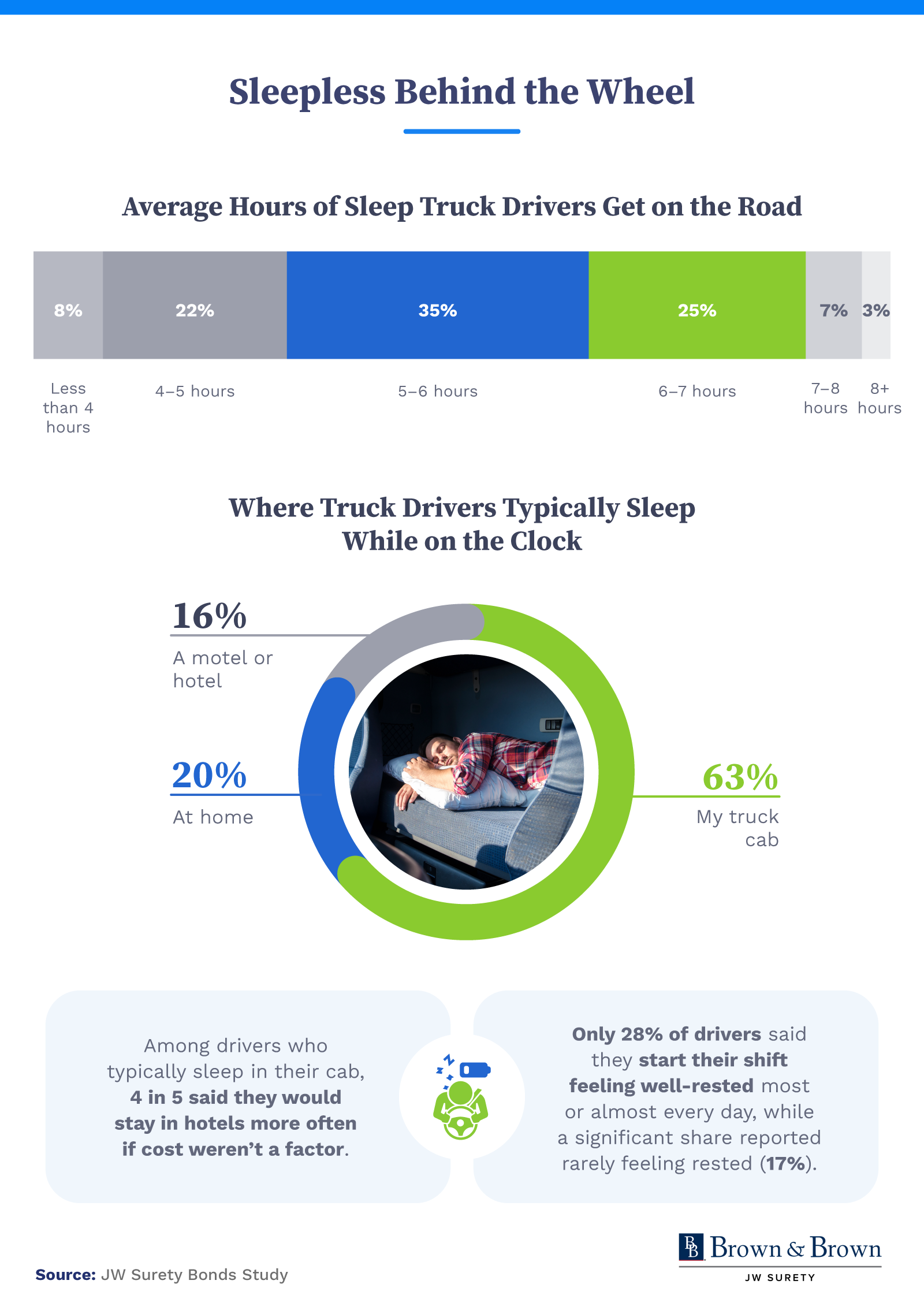
Nearly 2 in 3 drivers (65%) reported getting fewer than 6 hours of sleep on work nights, including 30% who slept 5 hours or less. These short sleep windows leave little room for recovery, especially for drivers working consecutive shifts.
Truckers most often sleep:
- In their truck cab (63%)
- At home (20%)
- In a motel or hotel (16%)
Among those who primarily sleep in their cab, 4 in 5 said they would stay in hotels more often if cost were not a factor.
Feeling rested was the exception rather than the norm. Only 28% of drivers said they start their shifts feeling well-rested most or almost every day, while 17% said they rarely feel rested. For many drivers, fatigue appears to be a routine part of the job rather than a temporary condition.
Truckers' Most Common Sleep Disruptions and How They Manage
Even when drivers make time for sleep, external factors often disrupt it. Many truck drivers are adapting to challenging environments instead of resting in conditions designed for recovery.
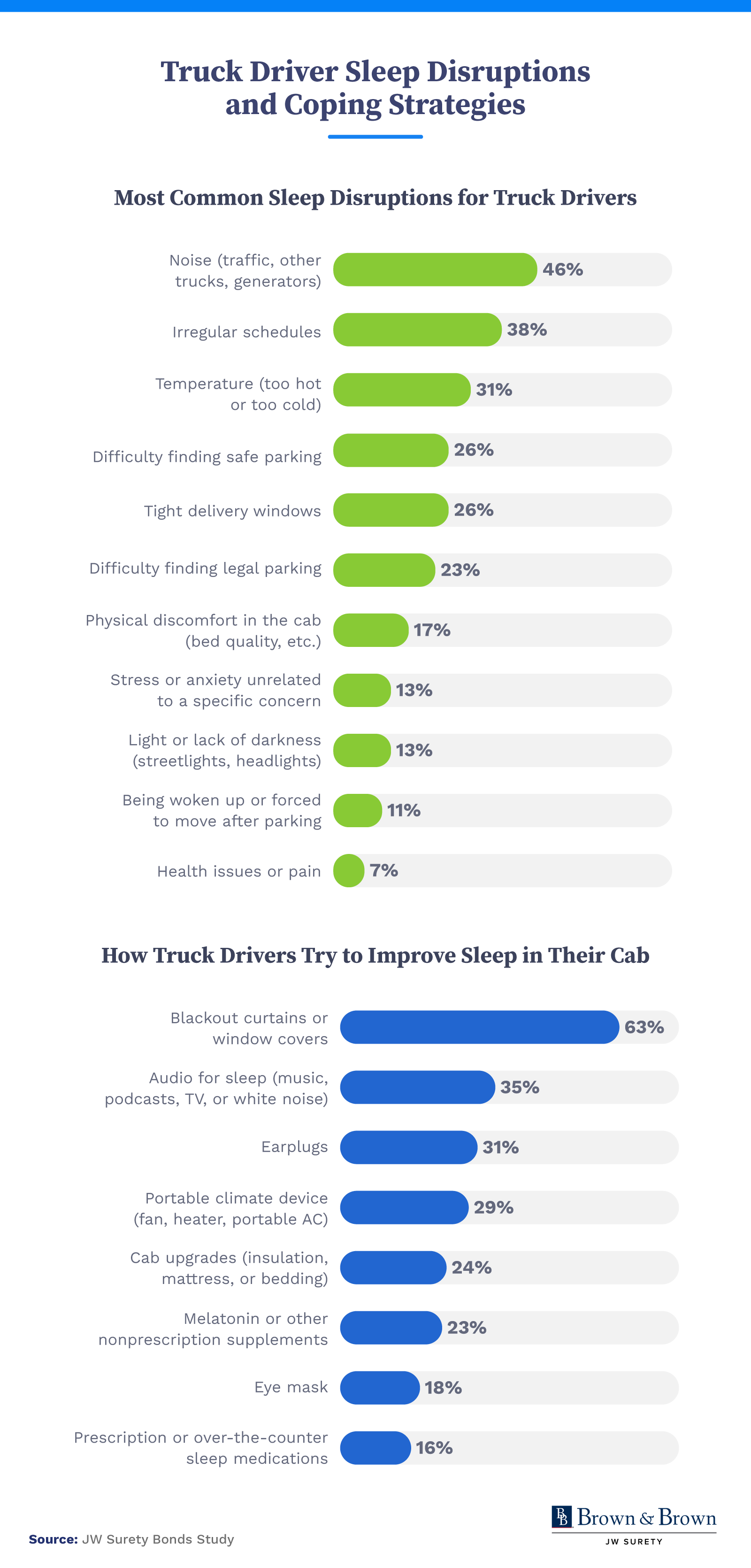
Noise was the most common sleep disruptor, cited by 46% of drivers. Work-related factors followed, including irregular schedules (38%) and tight delivery windows (26%). Parking shortages also created problems, with drivers struggling to find safe parking (26%) and legal parking (23%).
Rather than sleeping in quiet, controlled environments, drivers are often trying to block out noise and distraction. To cope, they most often rely on:
- Blackout curtains or window covers (63%)
- Audio for sleep (35%)
- Earplugs (31%)
Almost one-quarter (23%) reported using melatonin or other supplements, and 16% used sleep medications.
How Fatigue Silently Affects Safety Risks on American Roads
Fatigue doesn't stop at the sleeper berth. Drowsiness regularly follows drivers onto the road, influencing decisions and increasing safety risks.
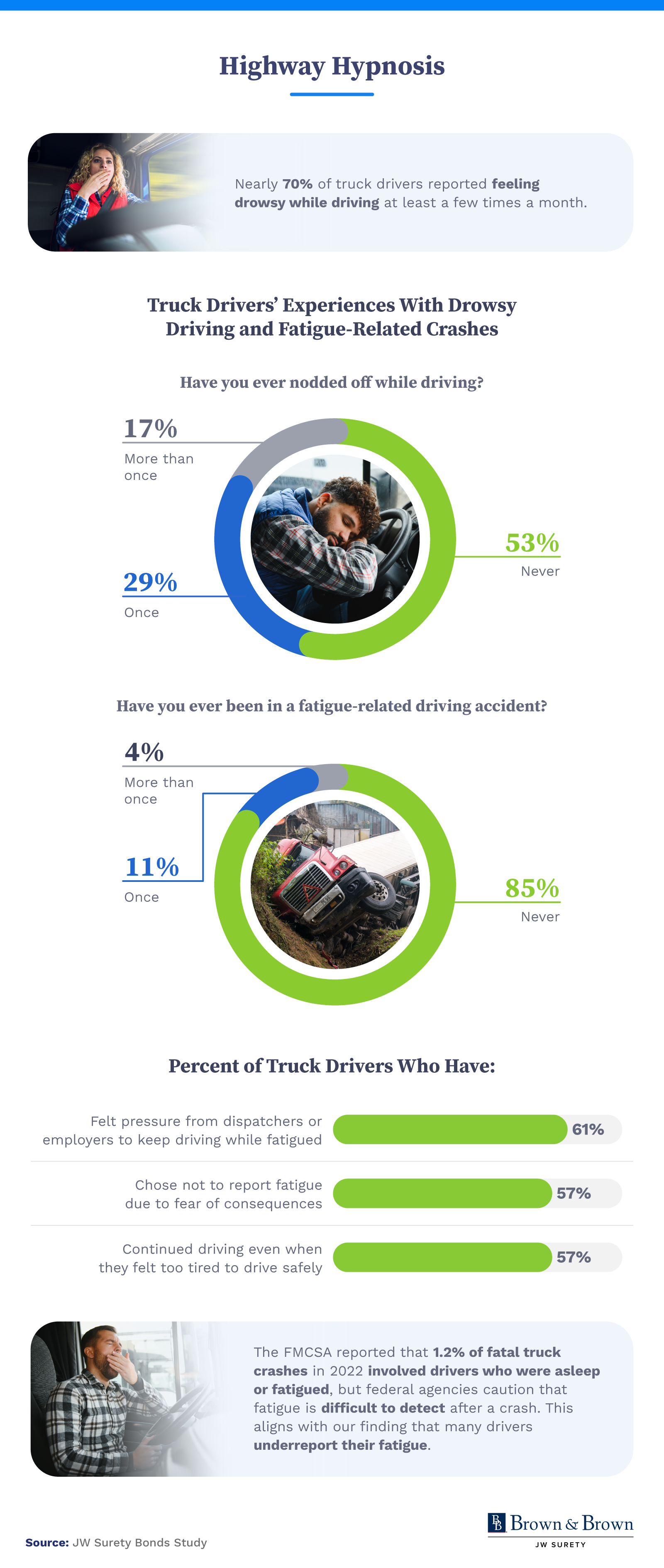
Seventy percent of truck drivers said they feel drowsy while driving at least a few times a month. A majority (57%) have continued driving even when they felt too tired to do so safely, while 61% reported feeling pressure from dispatchers or employers to keep driving. Nearly half (46%) had briefly fallen asleep while driving at least once in their career, either once (29%) or more than once (17%).
Fatigue also showed up in crash data and self-reported outcomes. More than 1 in 10 drivers (15%) reported being involved in a crash or accident while feeling fatigued. Federal records showed that 1.2% of fatal truck crashes in 2022 involved drivers who were asleep or fatigued.
More than half of drivers (57%) said they chose not to report fatigue because they feared negative consequences. These findings suggest that fatigue risks are likely higher than official data reflects.
What Prevents Better Sleep for Truckers and What It's Costing Them
The barriers to better sleep aren't just about personal choices. Many drivers face structural obstacles built into the job itself, and the costs go beyond feeling tired.
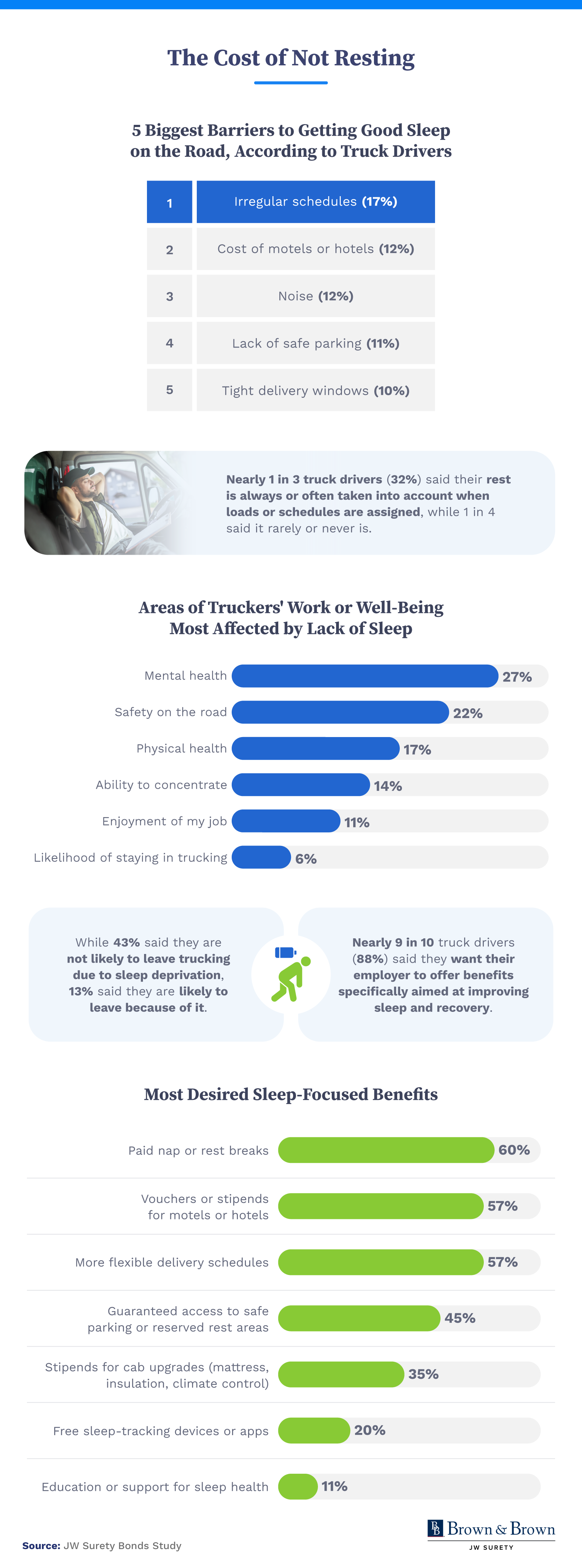
Irregular schedules were the most commonly cited barrier to good sleep (17%), followed by the cost of motels or hotels and noise (12% each). Only 32% said their rest was always or often considered when loads or schedules were assigned, while one-quarter said their rest needs were rarely or never considered.
The consequences extended beyond fatigue. Mental health was the most commonly affected area (27%), followed by road safety (22%), and physical health (17%).
While 43% of drivers were not likely to leave trucking due to sleep deprivation, 13% said they were likely to quit because of it.
Drivers were clear about what would help. Nearly 9 in 10 (88%) wanted their employer to offer benefits specifically designed to improve sleep and recovery. The most desired options were:
- Paid nap or rest breaks (60%)
- Motel or hotel vouchers (57%)
- More flexible delivery schedules (57%)
- Guaranteed safe parking or reserved rest areas (45%)
Only 20% wanted sleep-tracking devices or apps, suggesting drivers prioritize basic rest opportunities over technology.
Conclusion
This study shows that fatigue among truck drivers is widespread, deeply tied to working conditions, and closely connected to road safety risks. For employers and industry stakeholders, the findings point to practical opportunities to reduce risk by addressing scheduling, rest environments, and recovery support. Improving sleep is not just a health issue for drivers, but a safety and sustainability issue for the entire transportation system.
Methodology
We surveyed 320 truck drivers to understand how sleep, fatigue, and working conditions shape rest, safety, and decision-making on the job. The survey examined sleep duration, sleeping environments, common disruptions, coping strategies, fatigue-related driving behavior, reporting practices, and how sleep affects decisions about staying in the industry. The average age of respondents was 37, with 62% men, 37% women, and 1% nonbinary. Generationally, 3% were baby boomers, 17% were Gen X, 64% were millennials, and 16% were Gen Z. The survey was conducted in January 2026.
About JW Surety Bonds
JW Surety Bonds supports professionals and businesses in regulated industries by helping them meet bonding and licensing requirements with confidence. From freight broker bonds to commercial trucking insurance, we provide fast, reliable access to bonds and coverage that promote accountability, trust, and safer business practices nationwide.
Fair Use Statement
If you would like to share or discuss this study for noncommercial purposes, please provide proper attribution and a link back to JW Surety Bonds.

Leave a Reply