


Truck drivers play a huge role in keeping America's supply chain running smoothly, but for many, every trip comes with serious risks. Using federal crash data, this study identifies where fatal tractor-trailer crashes happen most often and which states offer safer conditions for drivers. By examining the most recent records from the National Highway Traffic Safety Administration's Fatality Analysis Reporting System (FARS), this analysis reveals how geography and road type can make all the difference between a routine haul and a life-threatening journey.
Key Takeaways
- Wyoming recorded the highest rate of fatal tractor-trailer crashes in the country, with 3.94 fatal crashes per 100,000 residents, making it the most dangerous state for truckers.
- Northeastern states consistently rank among the safest for truckers, with Massachusetts (0.10), Vermont (0.15), and Rhode Island (0.18) reporting the lowest per-capita rates of fatal tractor-trailer crashes.
- Interstates account for the largest share of fatal tractor-trailer crashes nationwide, representing approximately 35% of all such crashes.
The Most Dangerous and Safest States for Truckers
The risk of fatal tractor-trailer crashes varies dramatically across the U.S., and rural states tend to pose the greatest danger. Sparse populations, long stretches of highway, and unpredictable weather make certain areas especially treacherous for commercial drivers.
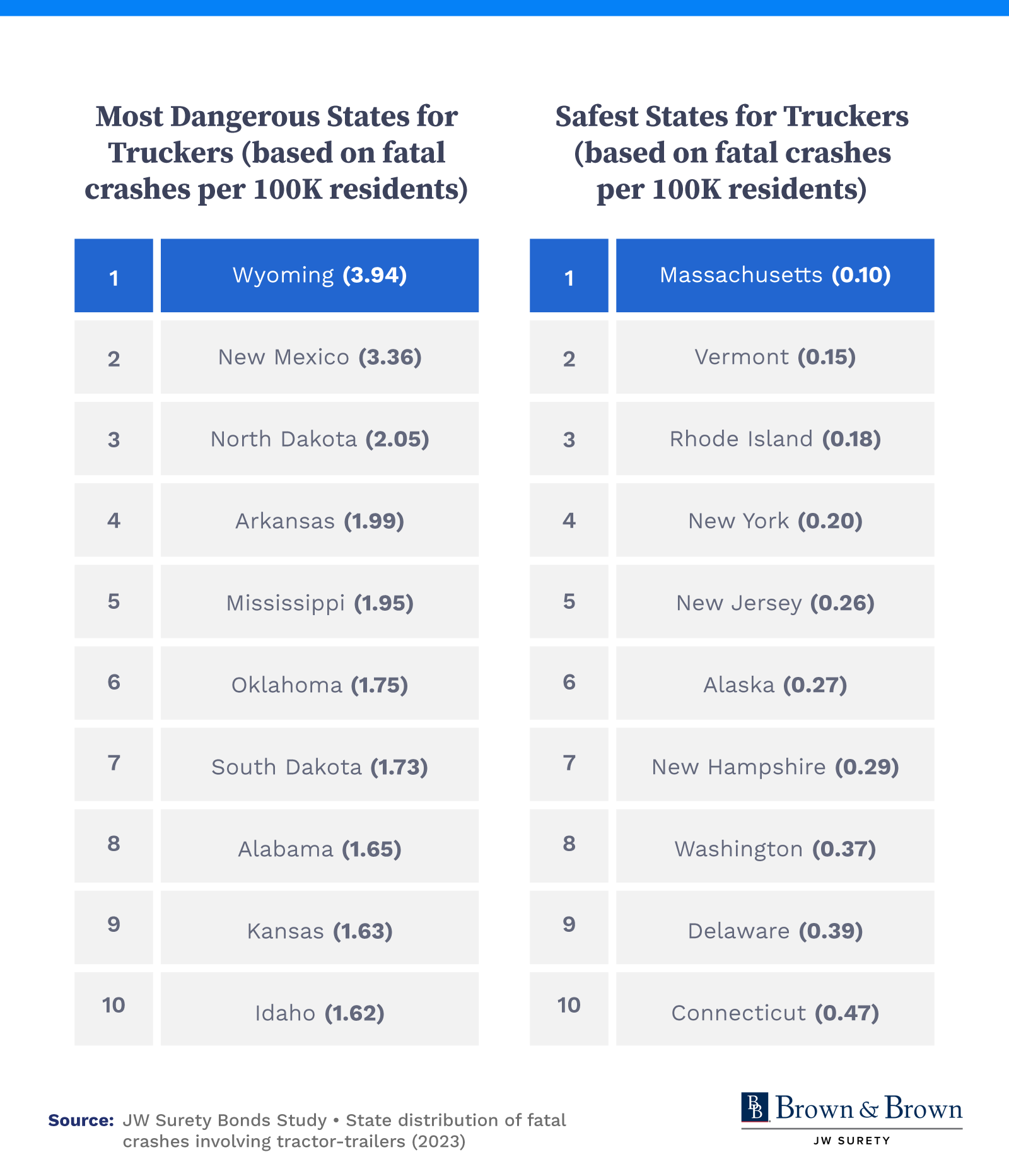
Wyoming ranked first as the most dangerous state for truckers, recording 3.94 fatal tractor-trailer crashes per 100,000 residents. The state's long, isolated roads and frequent high winds likely contribute to a higher risk of severe crashes.
Other rural states followed closely behind. New Mexico (3.36), North Dakota (2.05), Arkansas (1.99), and Mississippi (1.95) all reported elevated per-capita crash rates. By contrast, the Northeast ranked safest for truckers. Massachusetts, Vermont, Rhode Island, New York, and New Jersey reported the lowest per-capita fatal crash rates nationwide.
Where Fatal Truck Crashes Happen Most
Understanding where crashes occur is key to improving roadway safety. The FARS data shows that not all highways carry the same risk, and certain types of roads see far more deadly truck collisions than others.
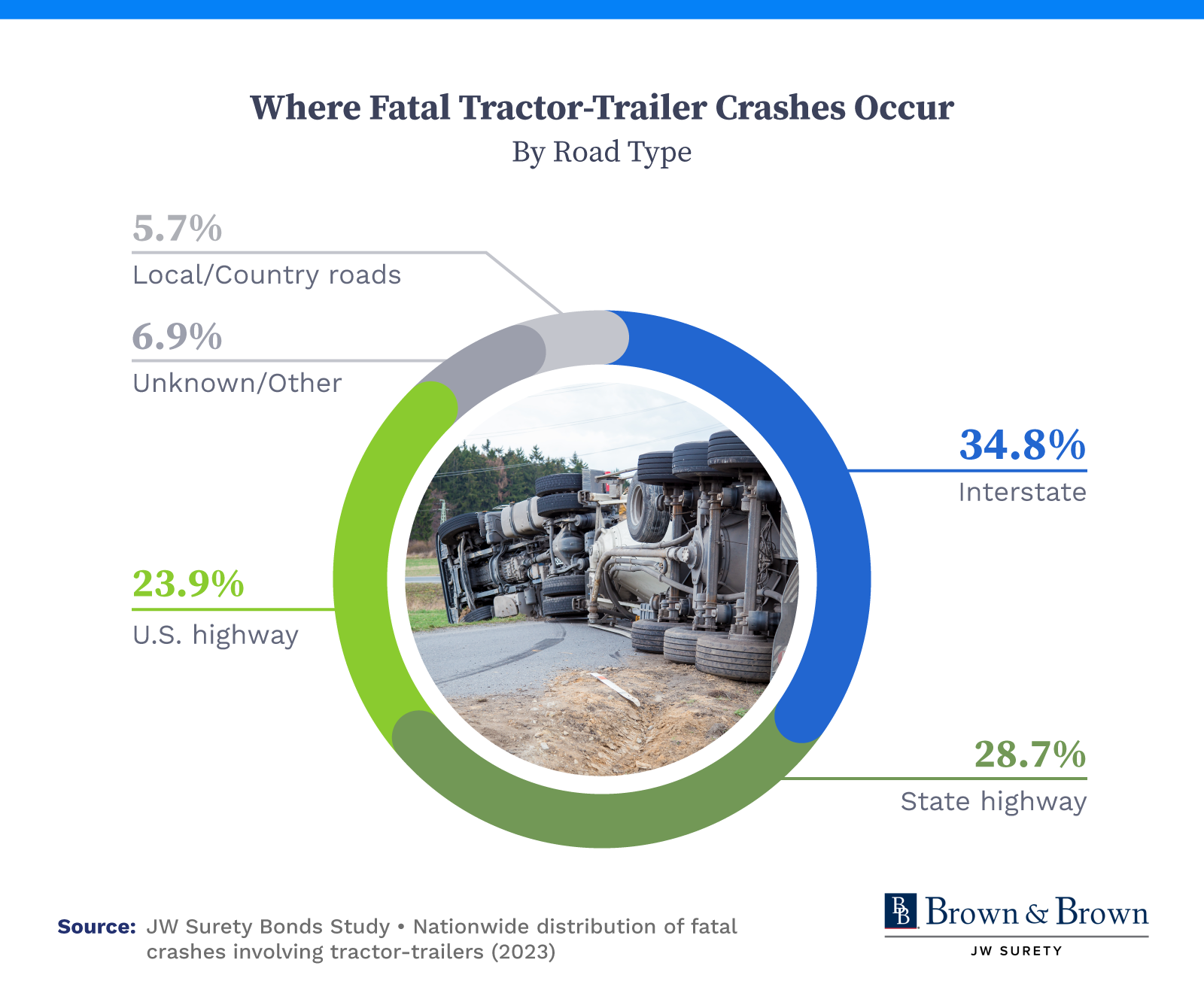
Interstates accounted for roughly 35% of all fatal tractor-trailer crashes in 2023, the largest share nationwide. High speeds, heavy freight traffic, and long hours behind the wheel increase the chances of catastrophic accidents on these major routes.
State and U.S. highways together accounted for more than half of all fatal tractor-trailer crashes. These roads often lack the divided lanes and safety barriers found on interstates, increasing the risk of head-on collisions or rollover incidents. For truckers, these findings reinforce the importance of defensive driving and maintaining strict rest schedules, especially when navigating rural or two-lane routes.
Closing the Safety Gap on America's Roads
Trucking is the lifeblood of the U.S. economy, but it remains one of the nation's most dangerous professions. Wyoming and other rural states face unique challenges that put drivers at higher risk, while the Northeast offers lessons in how infrastructure and regulation can improve outcomes.
Reducing fatal truck crashes will require a combination of improved roadway design, driver support, and consistent safety enforcement across state lines. As freight demand continues to grow, prioritizing trucker safety is not just good policy — it's essential for keeping America's goods, and its drivers, moving safely.
Methodology
This study analyzed the most recently available data (2023) from the National Highway Traffic Safety Administration's Fatality Analysis Reporting System (FARS), which records all motor vehicle traffic crashes in the United States that result in at least one fatality within 30 days of the crash. The analysis focused on fatal crashes involving tractor-trailers, identified using vehicle body classifications in the FARS database.
For state-level rankings, states were ranked by the number of fatal tractor-trailer crashes per 100,000 residents, using U.S. Census population estimates to calculate per-capita rates. Hawaii had no data available.
To examine where fatal truck crashes occur nationwide, crashes were grouped by roadway type (interstate, state highway, U.S. highway, and other roadways). This study measures crash occurrence rather than fault or causation and does not account for traffic volume, vehicle miles traveled, weather conditions, or roadway length.
About JW Surety Bonds
JW Surety Bonds is one of the nation's leading providers of surety bond solutions, helping trucking companies and freight professionals stay compliant and protected. From freight broker bonds to motor carrier bonds, our expert team makes it easy to secure the bonds you need to keep your business running safely and legally. Whether you're an independent operator or managing a fleet, JW Surety Bonds offers fast, reliable bonding support for every step of the journey.
Fair Use Statement
Information from this article may be shared for noncommercial purposes only. Please include a link with proper attribution to JW Surety Bonds when citing or referencing this content.

Leave a Reply