

When temperatures drop and roads turn icy, truck drivers face challenges that few can imagine. From navigating steep mountain passes in snowstorms to managing tight deadlines on slick highways, winter trucking is one of the toughest jobs on the road.
To uncover where truckers face the most extreme conditions, JW Surety Bonds analyzed fatal tractor-trailer crashes alongside climate data and surveyed 141 professional drivers about their experiences. Winter weather affects not only safety, but also the lives and livelihoods of America's truck drivers.
Key Takeaways
- Wyoming tops the list as America's most challenging state for winter trucking.
- Truckers add an average of 9.1 hours per week to their routes in the winter.
- 30% said they "always" or "very often" feel pressured to drive unsafely in the winter.
- 92% of truckers said winter driving has made them consider quitting.
- Florida ranks as the least challenging state for winter trucking, with zero snowfall and mild average temperatures of 62°F.
America's Toughest States for Winter Trucking
Even the most skilled truck drivers can struggle when facing whiteout conditions, black ice, and freezing temperatures. Some states make the job especially challenging.
Wyoming tops the list as America's most challenging state for winter trucking. Cold temperatures, snow, icy roads, and remote routes make breakdowns and delays a serious risk, even for experienced truckers. Alaska is the second-toughest state for winter trucking, followed by Vermont, North Dakota, and Minnesota.
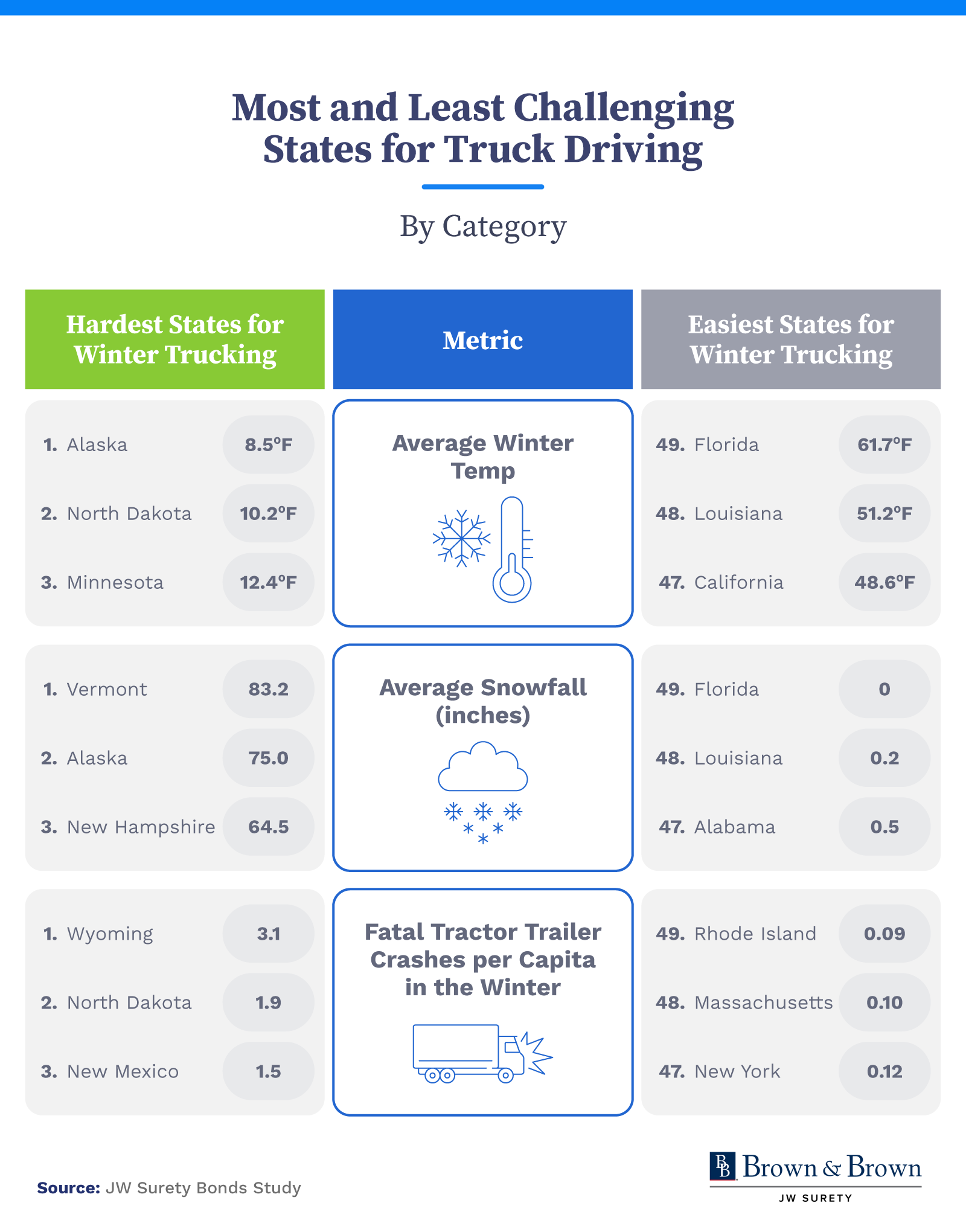
Florida stands out as America's least challenging state, offering mild winter temperatures averaging 62°F and no measurable snowfall. California, Louisiana, Texas, and Georgia round out the five safest states for winter trucking.
Inside the Cab: How Winter Changes the Way Truckers Drive
Truck drivers know that winter demands more than just slower speeds. It changes every part of how they work and plan their routes.
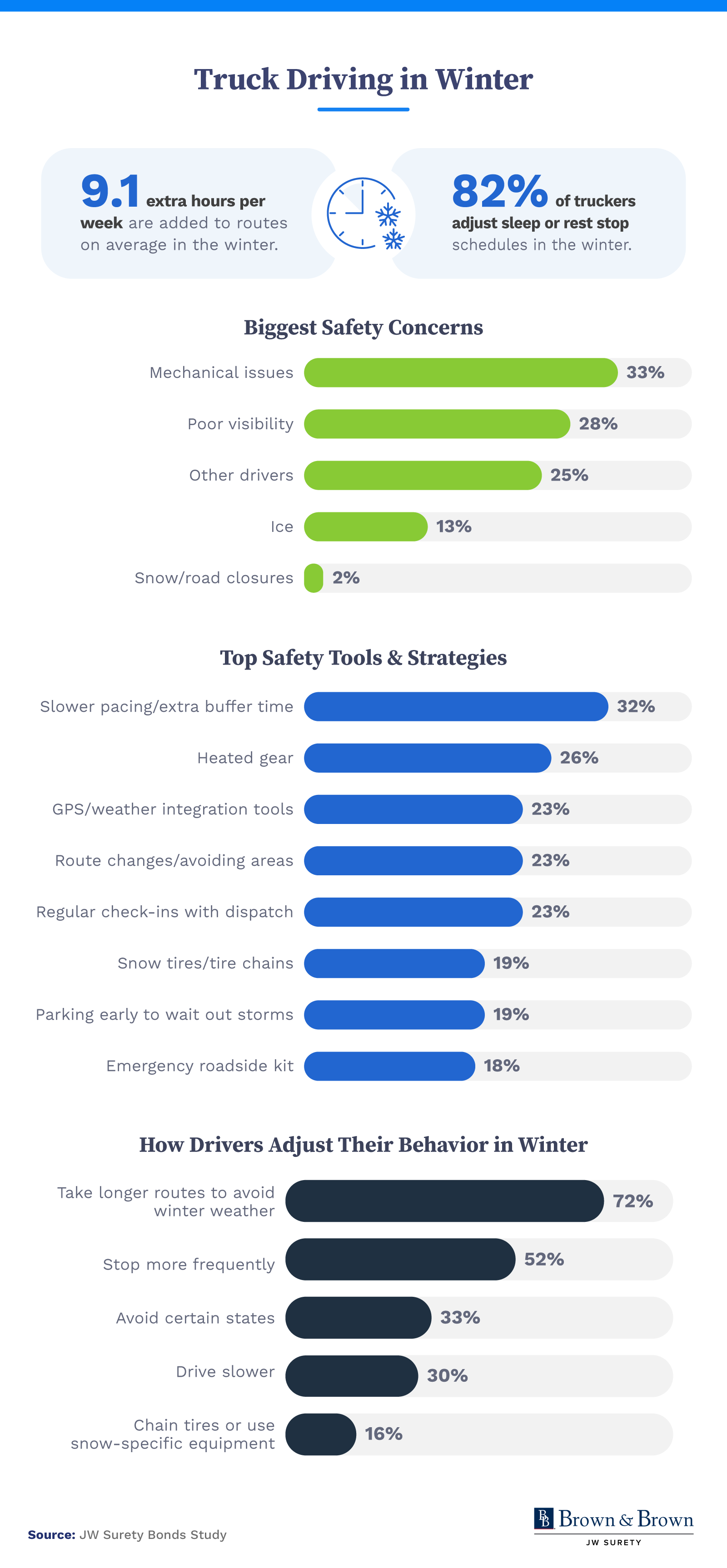
According to survey results, winter adds an average of 9.1 hours to drivers' weekly driving schedules. Reduced speeds or longer, slower routes to avoid dangerous conditions likely contribute to this increase.
Mechanical failures topped the list of winter safety concerns, cited by 33% of truckers, outranking poor visibility (28%) and the unpredictability of other drivers (25%). Cold weather wears down equipment quickly, leading to costly repairs and unexpected downtime.
The majority of drivers (82%) reported adjusting both their sleep and rest-stop schedules in the winter. Unpredictable weather often means stopping early or waiting out storms. Nearly 9 in 10 drivers (89%) said they've experienced unpaid downtime during the season, and 31% admitted to missing delivery deadlines "very often" because of it.
Weatherproof or Worn Down? The Mental Toll of Winter Trucking
Beyond the physical dangers, winter driving takes a mental and emotional toll that can't be ignored.
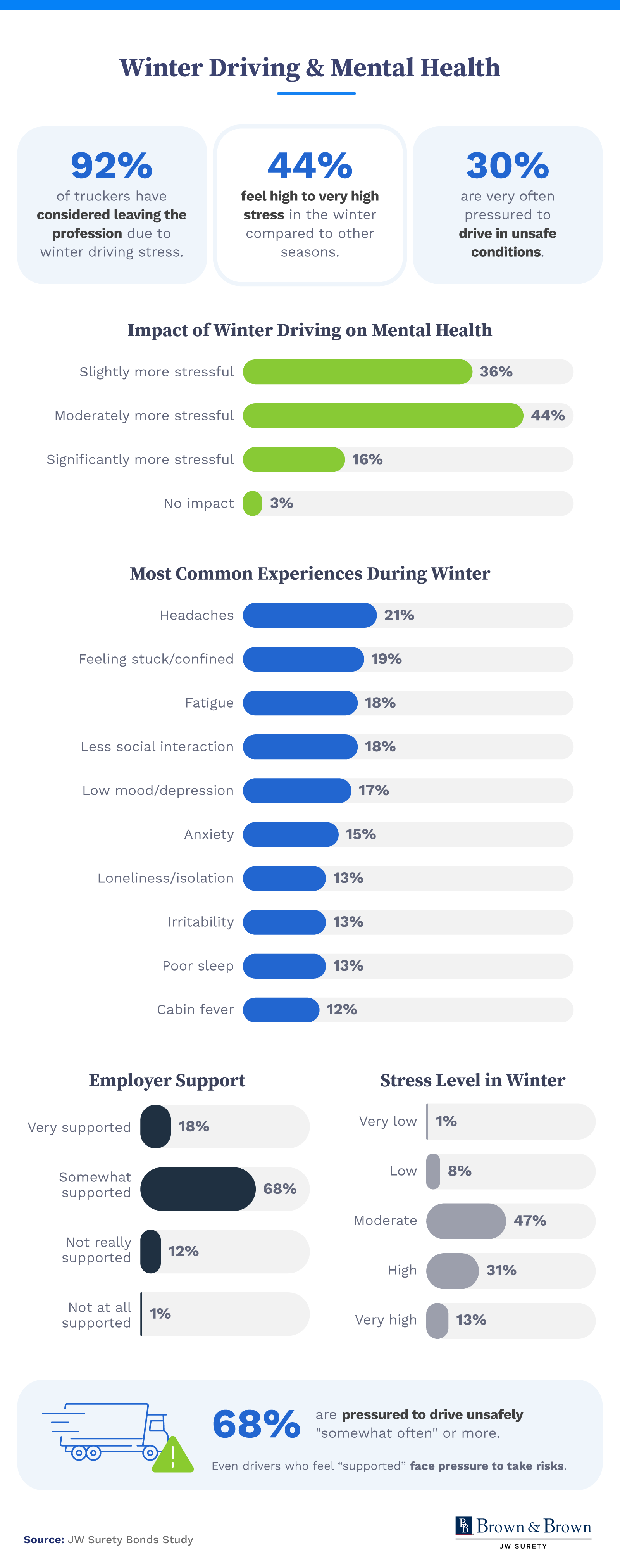
Almost all truckers — 92% — said winter driving has made them consider quitting altogether. For many, the combination of long hours, cold weather, and constant vigilance adds up to burnout. Thirty percent admitted feeling "always" or "very often" pressured to drive in unsafe conditions, a sign of the industry's demanding pace, even when the weather makes routes treacherous.
Nearly half of respondents (44%) reported high stress levels during the winter months, and 91% said harsh driving conditions made them feel exhausted faster. That fatigue can turn dangerous, both mentally and physically, creating a cycle of stress that compounds as winter drags on.
Navigating the Icy Road Ahead
Winter transforms trucking from a job into a test of endurance. From mechanical breakdowns to mounting stress, truck drivers across the country face a season filled with risk. Yet their dedication keeps America's supply chain moving through some of the harshest conditions imaginable.
Understanding which states pose the greatest dangers, and how winter affects drivers' safety, schedules, and well-being, can help policymakers, carriers, and the public better support those behind the wheel. The road may freeze, but the work doesn't stop.
Methodology
This study analyzed fatal tractor-trailer crashes during winter months using data from two sources: the Fatality Analysis Reporting System (FARS) and the National Oceanic and Atmospheric Administration (NOAA).
Fatal crash data were obtained from the National Highway Traffic Safety Administration's Fatality Analysis Reporting System (FARS) for calendar years 2022 and 2023. The analysis focused exclusively on crashes involving tractor trailers during the winter months.
Vehicle filtering was performed to select only vehicles classified as truck tractors based on two criteria: (1) body type codes 78 (truck tractor/bobtail) and 79 (truck tractor/semi-trailer), and (2) vehicle configuration codes 5 (truck tractor/semi-trailer), 6 (truck tractor/double), and 7 (truck tractor/triple). This approach ensured the dataset included only professional commercial trucking vehicles, excluding straight trucks, pickup trucks, and passenger vehicles.
Winter months were defined as December, January, February, and March, representing the period of highest winter weather risk. For 2022, this included December 2021 through March 2022; for 2023, December 2022 through March 2023. Crash-level and vehicle-level data were merged using state and case identifiers to create a comprehensive dataset linking crash characteristics to tractor trailer involvement.
The final dataset comprised 1,872 fatal crashes involving tractor trailers across 49 states and territories during the winter months over the two-year period. Each crash record included state, month, year, crash identifier, and number of fatalities.
Weather Data:
State-level winter climate data were obtained from the National Oceanic and Atmospheric Administration's (NOAA) Climate Normals database. Climate normals represent 30-year averages (1991–2020) and are the scientific standard for characterizing typical climate conditions, as recommended by the World Meteorological Organization. These data smooth out year-to-year variability and provide a reliable baseline for understanding typical winter weather conditions across states.
For each state, the following variables were compiled from NOAA Climate Normals:
- Average winter temperature (December–March mean in degrees Fahrenheit)
- Average seasonal snowfall (total inches per winter season)
These metrics were derived from NOAA's 1991-2020 Climate Normals dataset.
The final weather dataset included 49 states (excluding Hawaii). Using climate normals rather than year-specific weather data provides a more stable measure of typical winter conditions and reduces confounding from anomalous weather years.
Final ranking:
FARS and NOAA data analyses were combined to rank states based on the following metrics:
- Average winter temperature (37.5%)
- Average snowfall (37.5%)
- Fatal tractor-trailer crashes in the winter per capita (25%)
We also surveyed 141 truck drivers to explore their experiences in the winter.
About JW Surety Bonds
JW Surety Bonds is one of the nation's largest surety bond providers, helping businesses across industries stay compliant and protected. For trucking professionals, we offer essential products like freight broker bonds, ensuring your operations remain secure through every season. Whether you're starting a new trucking business or renewing your license, our team makes bonding simple, fast, and affordable, so you can keep your business moving, no matter the weather.
Fair Use Statement
You may share this analysis for noncommercial purposes with proper attribution. Please include a link to JW Surety Bonds when citing or referencing this study.

Leave a Reply