


Some freight brokers have put hiring and expansion plans on hold, and others have considered leaving the business over financial security requirements. The Federal Motor Carrier Safety Administration's (FMCSA) new financial security rules, which took effect January 16, 2026, are designed to help protect carriers and shippers from unpaid freight bills.
JW Surety Bonds surveyed 508 U.S. freight brokers, motor carriers, and other logistics professionals to learn how those requirements are affecting their work. Brokers shared concerns about keeping their businesses running, while carriers described how they decide which brokers to trust with their next load.
Key Takeaways
- 63% of freight brokers expect tighter financial requirements to force brokerages out of the market within the next year.
- Only 18% of brokers are very confident they could refill their bond or trust within 7 days.
- Nearly 2 in 5 freight brokers (37%) have thought about leaving the business because of financial security rules.
- 52% of carriers have walked away from a load over a broker's finances.
- 49% of carriers are less willing to work with newly authorized brokers.
- 59% of carriers would accept a lower-paying load from a broker they were more confident would pay them.
- 52% of freight brokers have delayed hiring in the past year because of financial security rules, and 50% have delayed expansion plans.
Freight Brokers Expect Tougher Rules to Push Competitors Out
Financial security requirements are becoming a major concern for freight brokerages of all sizes. The ability to maintain and quickly replenish a bond or trust could make a difference in how brokers navigate an increasingly demanding market.
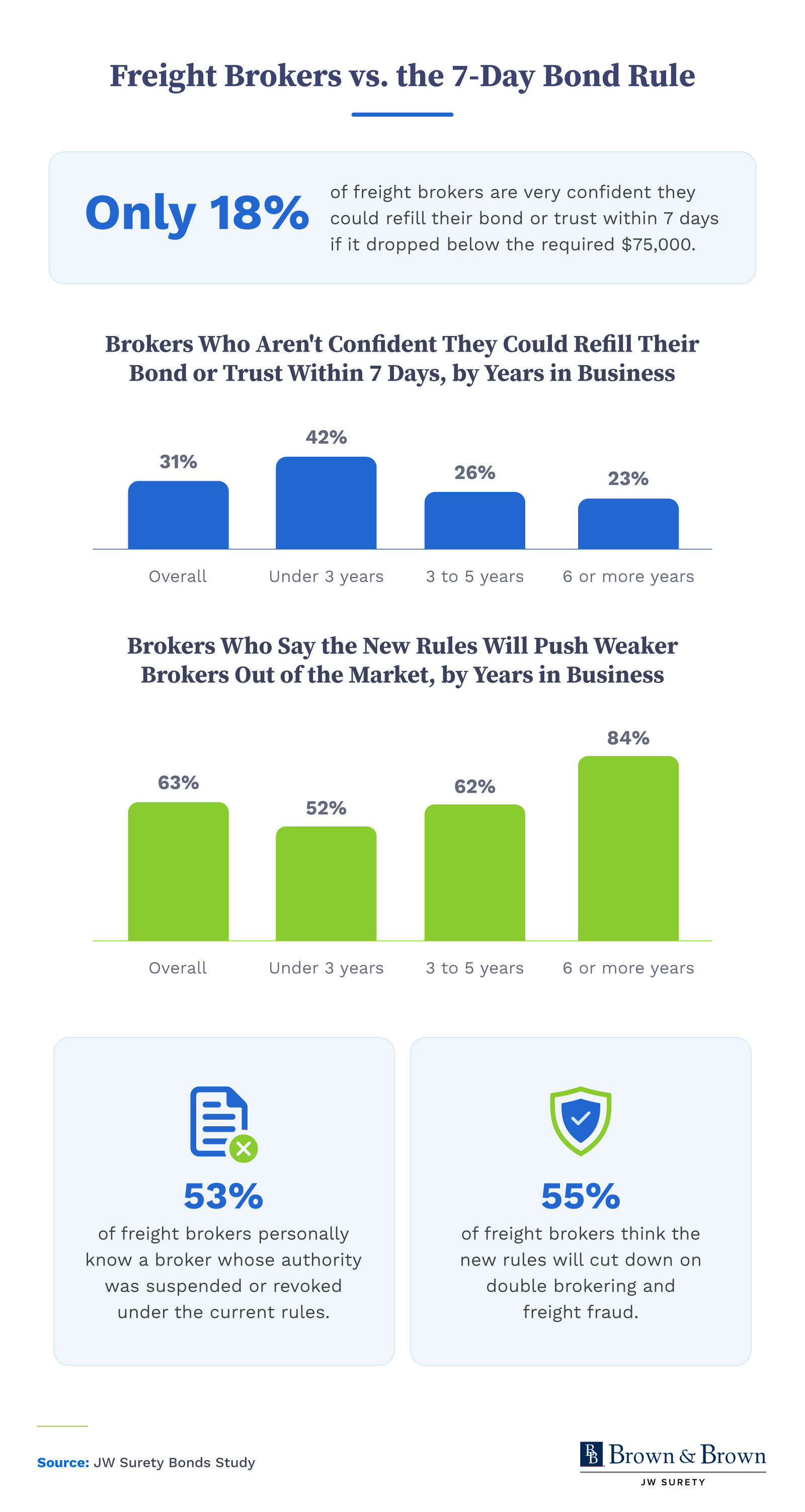
Nearly two-thirds of freight brokers (63%) expected tighter financial requirements to force brokerages out of the market within the next year. More experienced operators saw the changes as a potential shakeout for the industry. Among veteran freight brokers with six or more years of experience, 84% anticipated that tougher rules would push weaker competitors out.
Yet confidence in meeting these requirements was limited. Only 18% of brokers were very confident they could replenish their financial security within the required seven-day window. This raises concerns about how prepared brokerages are to respond if their bond or trust falls below the required amount.
Newer operators face greater uncertainty about meeting financial security obligations. Among those operating for fewer than three years, 42% weren't confident they could replenish their security within the specified window, compared with 23% of brokers who had been in business for six years or more.
Financial Security Rules Are Slowing Brokerage Growth
For freight brokers, regulatory pressure can affect more than day-to-day compliance. Decisions about hiring, expansion, and whether to remain in the industry are also tied to financial security concerns.
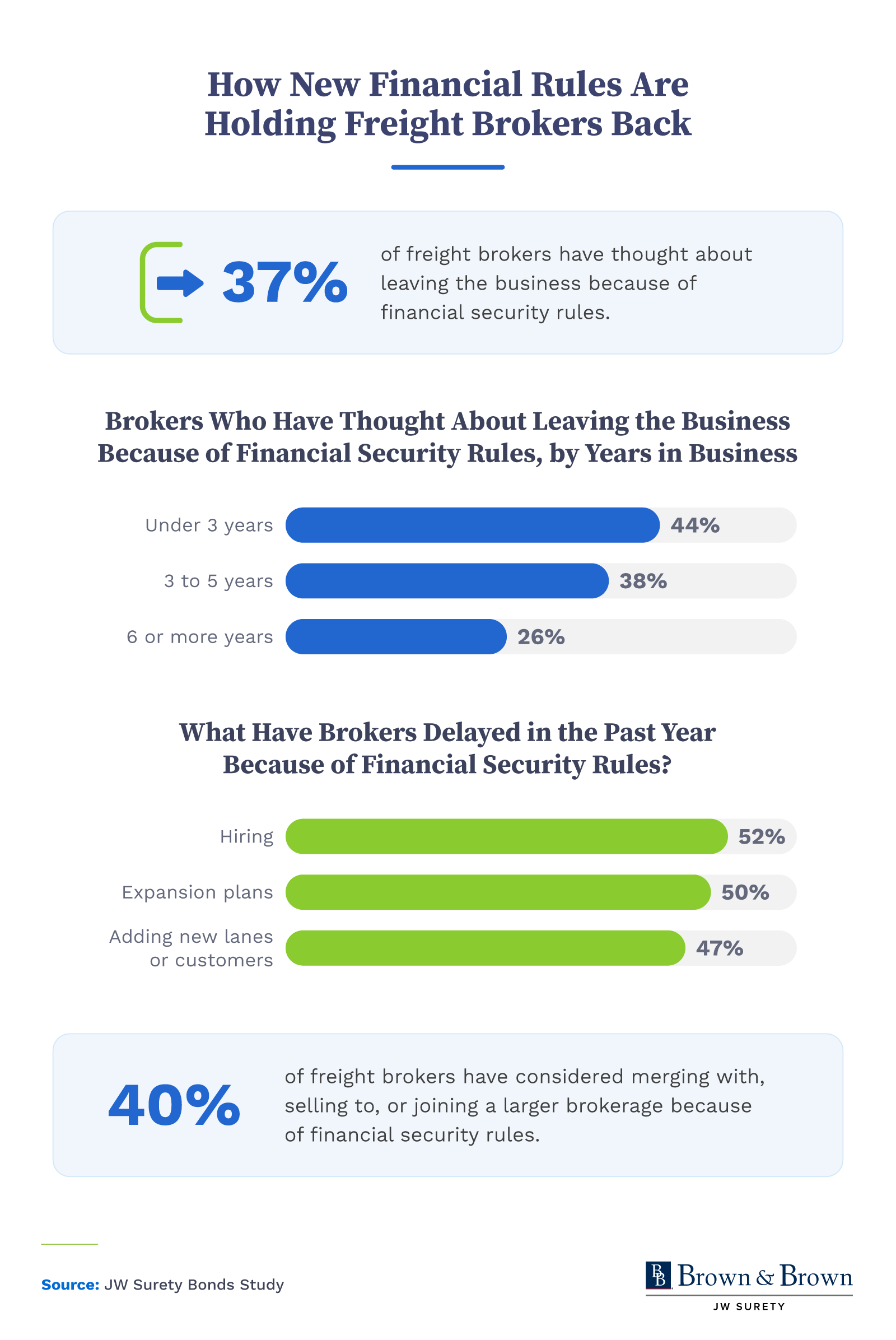
Brokers are holding back on business growth as they navigate the financial demands of staying compliant. More than half of freight brokers (52%) had delayed hiring in the past year because of financial security rules, while 50% had postponed expansion plans.
The pressure also led some brokers to reconsider their future in the industry. Nearly 2 in 5 (37%) had considered leaving the business due to financial security requirements, indicating that the impact extended beyond operational decisions.
Newer brokerages were more likely to consider exiting. Among brokers with fewer than three years in business, 44% had thought about leaving, compared with 26% of those operating for six years or more. This difference underscores the challenges newer businesses face as they work to establish themselves while meeting financial security requirements.
Carriers Are Prioritizing Payment Confidence Over Higher Rates
For motor carriers, choosing a freight broker involves more than finding a profitable load. Confidence in a broker's ability to pay can influence which loads carriers accept and which business relationships they avoid.
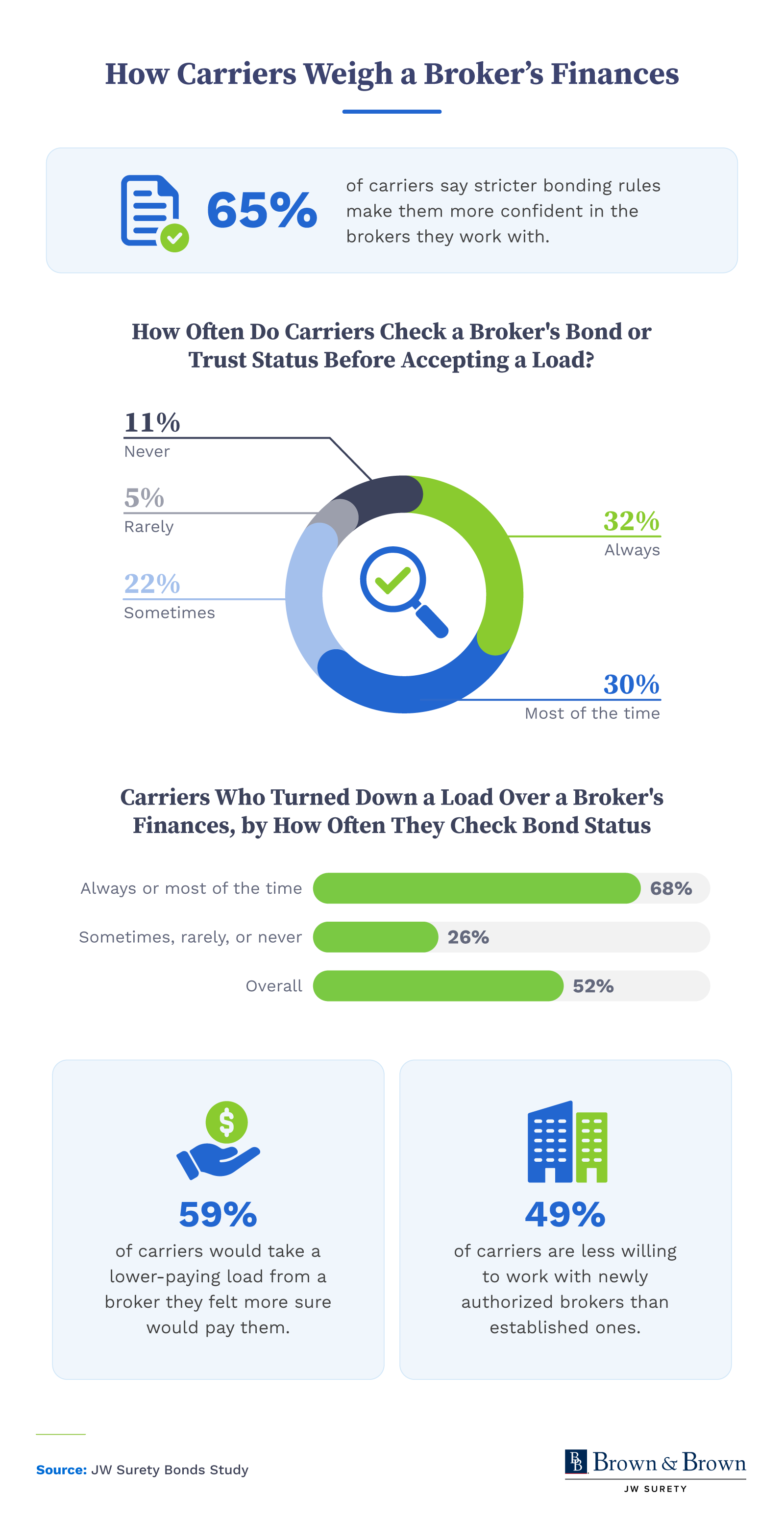
More than half of carriers (52%) had walked away from a load because of concerns about a broker's finances, while 49% were less willing to work with newly authorized brokers. Payment confidence also outweighed potential earnings for many respondents: 59% said they would accept a lower-paying load from a broker they trusted more to pay them.
Those concerns reflect real payment experiences. More than 1 in 4 carriers (28%) reported that a broker had failed to pay them for a load in the past year. Among those affected, 91% recovered at least some of the money through the broker's bond or trust, including 61% who recovered part of their payment and 30% who recovered the full amount.
Carriers also identified several financial signals they consider before accepting a load. Quick pay availability ranked highest at 40%, followed by:
- How long the broker's operating authority had been active (38%)
- Average days to pay (37%).
- Active bond or trust status (36%)
- Credit scores or ratings (33%)
- Reviews from other carriers (27%)
These preferences show how carriers evaluate brokers using multiple measures of financial reliability. For freight brokers, maintaining an active bond or trust, offering dependable payment terms, and building a positive payment history could help strengthen relationships with carriers.
The Future of Freight Brokerage Depends on Financial Trust
Tighter financial security rules are changing how freight brokers and carriers approach business. Brokers anticipate that tougher requirements will drive competitors out, while many have already delayed hiring or expansion, and some have considered leaving the industry altogether. Meanwhile, carriers showed a willingness to turn down loads or accept lower rates in exchange for greater payment confidence. As financial credibility becomes a bigger factor in freight relationships, brokers who can demonstrate stability and meet their security obligations may be better positioned to earn carrier trust.
Methodology
We surveyed 508 U.S. freight brokers, motor carriers, and other logistics professionals about how the FMCSA's financial security rules are changing the freight market. Respondents were 26% freight brokers, 16% motor carriers, and 58% other logistics professionals, such as shippers, dispatchers, 3PLs, and freight forwarders. The generational breakdown was 52% millennials, 23% Gen Z, 21% Gen X, and 4% baby boomers; 60% were men, and 40% were women. Data was collected in October 2026.
About JW Surety Bonds
JW Surety Bonds helps freight brokers and businesses across the U.S. meet their bonding requirements with straightforward, reliable surety bond solutions. Whether you're starting a brokerage or maintaining compliance with FMCSA financial security requirements, our team makes it easier to secure a freight broker bond (BMC-84) and keep your business moving forward with confidence.
Fair Use Statement
The findings in this article may be shared for noncommercial purposes only. Any use or redistribution must include proper attribution to JW Surety Bonds and a link to the original article.

Leave a Reply